Introduction
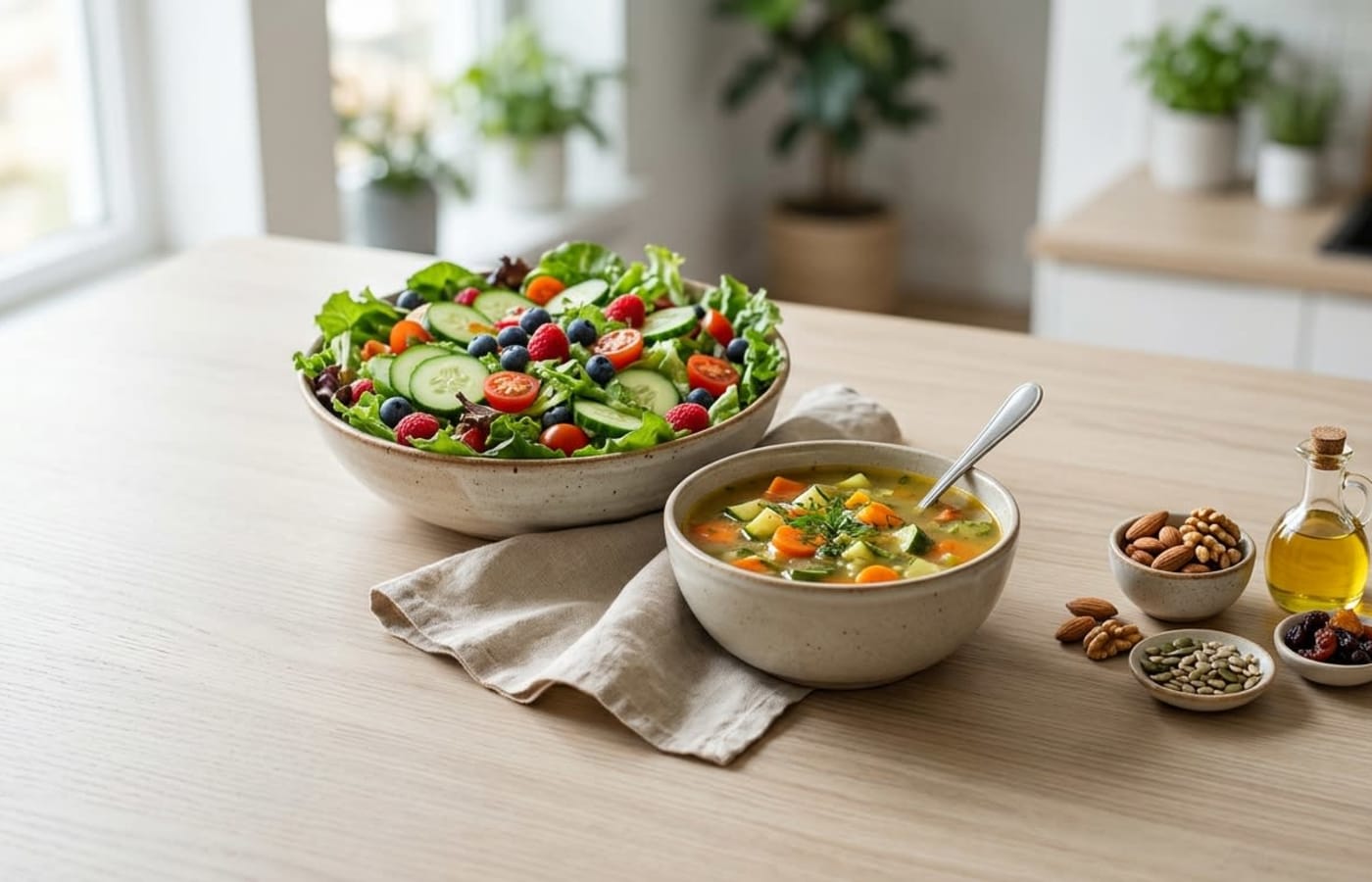
Have you ever noticed that a large bowl of vegetable soup can contain fewer calories than a small handful of nuts? Or that a plate full of vegetables may provide fewer calories than a much smaller serving of fried food?
The reason often comes down to calorie density.
Calorie density describes how much energy a food provides relative to its weight. Foods with high water content, such as many fruits and vegetables, generally provide fewer calories per gram. Foods containing more concentrated fat or less water, such as oils, nuts and dried fruit, usually provide more calories per gram.
Understanding calorie density can make meal planning easier. It can help you build satisfying meals, manage portions and make informed food choices without relying only on calorie counting or avoiding particular foods.
However, calorie density is not a measure of whether a food is healthy or unhealthy. Nuts, seeds, olive oil and avocado can be nutritious despite being relatively calorie-dense. The goal is to understand how different foods fit into your overall diet.
In this guide, you will learn how calorie density works, how to calculate it, which foods are lower or higher in calories per gram, and how to use this information for weight management and everyday meal planning.
1. What Is Calorie Density?
Calorie density, also called energy density, is the number of calories a food provides in relation to its weight.
It is usually expressed as calories per gram (kcal/g).
For example:
A food containing 50 calories in 100 grams has a calorie density of 0.5 kcal/g.
A food containing 200 calories in 100 grams has a calorie density of 2 kcal/g.
A food containing 500 calories in 100 grams has a calorie density of 5 kcal/g.
This means that the second food provides four times as many calories per gram as the first food.
The concept is useful because people often eat food by volume or portion size rather than thinking about its energy content per gram. Two plates can look similar in size but contain very different amounts of energy.
Calorie density formula
You can calculate calorie density using a simple formula:
Calorie density = Total calories ÷ Food weight in grams
For example, imagine a 150-gram serving contains 180 calories:
180 ÷ 150 = 1.2 kcal/g
Its calorie density is 1.2 calories per gram.
You can use the same calculation for individual foods, homemade meals and complete recipes.
2. Why Do Some Foods Have More Calories Per Gram?
Three factors have a major influence on calorie density: water, fibre and fat.
Water content
Water adds weight and volume without adding calories.
That is why foods with high water content often have relatively low calorie density. Examples include cucumber, tomatoes, watermelon, strawberries and vegetable soup.
Compare two foods:
100 grams of cucumber contains very few calories.
100 grams of cooking oil contains close to 900 calories.
Both weigh the same, but their energy content is dramatically different.
Fibre content
Fibre contributes to the structure and weight of many plant foods. Foods such as vegetables, fruit, beans, lentils and whole grains can provide fibre alongside other nutrients.
Fibre-rich foods may also help meals feel more satisfying, although fullness depends on several factors, including portion size, protein, food texture and individual appetite.
Fat content
Fat provides approximately 9 calories per gram, while protein and carbohydrate provide approximately 4 calories per gram.
This is one reason why oils, butter, nuts and seeds tend to have higher calorie density than many water-rich foods.
That does not mean fat should be avoided. Dietary fats have important roles in the body, and foods such as nuts, seeds, olive oil and avocado can contribute beneficial nutrients. The practical point is that relatively small portions can provide substantial energy.
3. Calorie Density Food Chart: Low, Medium and High
The following chart provides practical examples of how calorie density can vary between foods.
Values are approximate and can vary by variety, preparation method, brand and moisture content. Use a food database or product label when precise tracking is important.
Food | Approx. calories per 100g | Approx. kcal/g |
|---|---|---|
Cucumber | 15 | 0.15 |
Lettuce | 15 | 0.15 |
Watermelon | 30 | 0.30 |
Strawberries | 32 | 0.32 |
Tomatoes | 18 | 0.18 |
Broccoli | 35 | 0.35 |
Orange | 47 | 0.47 |
Apple | 52 | 0.52 |
Boiled potato | 87 | 0.87 |
Cooked lentils | 116 | 1.16 |
Cooked white rice | 130 | 1.30 |
Whole egg | 143 | 1.43 |
Chicken breast, cooked | 165 | 1.65 |
Bread | 250–270 | 2.50–2.70 |
Cheddar cheese | 400 | 4.00 |
Almonds | 579 | 5.79 |
Peanut butter | 588 | 5.88 |
Olive oil | 884 | 8.84 |
These figures are examples, not fixed values for every product or recipe.
Very low calorie density foods
Many non-starchy vegetables and some fruits have a calorie density below approximately 0.6 kcal/g.
Examples include:
Cucumber
Lettuce
Tomatoes
Mushrooms
Spinach
Zucchini
Broccoli
Cauliflower
Watermelon
Strawberries
Oranges
These foods can add volume, water and micronutrients to meals.
Low calorie density foods
Foods in this general range may include many fruits, vegetables, broth-based soups and some cooked starchy vegetables.
Examples include:
Apples
Pears
Oranges
Carrots
Pumpkin
Boiled potatoes
Vegetable soups
Some bean and lentil dishes, depending on preparation
Medium calorie density foods
This group can include foods such as cooked grains, legumes, eggs, fish and lean meats.
Examples include:
Cooked rice
Cooked pasta
Cooked lentils
Beans
Eggs
Lean chicken
Fish
Plain yoghurt
Their calorie density varies with cooking method, fat content and added ingredients.
High calorie density foods
Foods with concentrated fat or relatively little water often have higher calorie density.
Examples include:
Cooking oils
Butter
Nuts
Seeds
Nut butters
Cheese
Chocolate
Crisps
Dried fruit
These foods can still be part of a balanced diet. Their portions simply matter more when you are trying to control total calorie intake.
Important: There is no single universally accepted set of calorie-density categories for every food. The ranges above are practical ways to compare foods, not official medical classifications.
4. Low-Calorie-Density Foods That Can Help You Feel Full
If your goal is to manage your weight, choosing meals with a useful combination of volume, fibre and protein can make eating more satisfying.
Consider these food groups.
Vegetables
Vegetables can increase the size of a meal without adding as many calories as many concentrated ingredients.
Try adding:
Cucumber and tomato salad
Steamed broccoli
Spinach
Cauliflower
Carrots
Cabbage
Mixed vegetable dishes
Cooking methods and added oil can change the final calorie content. A vegetable dish cooked with several tablespoons of oil may be much more calorie-dense than the same vegetables steamed or lightly sautéed.
Whole fruits
Whole fruit contains water and, in many cases, fibre.
Useful choices include:
Apples
Oranges
Pears
Berries
Melons
Peaches
Whole fruit is generally more filling than drinking an equivalent amount of calories as juice because it retains its structure and fibre.
Soups
Broth-based vegetable soups can provide a large serving with relatively few calories, depending on their ingredients.
Cream, butter, coconut milk and large amounts of oil can substantially increase the calorie density. A soup made primarily with vegetables and broth will usually be less calorie-dense than a rich cream-based version.
Beans and lentils
Beans, chickpeas and lentils provide carbohydrates, fibre and plant protein.
They are not necessarily as low in calorie density as watery vegetables, but they can be useful ingredients in satisfying meals.
For example, adding lentils to vegetable soup can increase its protein and fibre content while creating a more substantial meal.
5. Calorie Density vs Nutrient Density: What Is the Difference?
These two terms sound similar, but they describe different things.
Calorie density measures how many calories a food provides per gram.
Nutrient density describes how much beneficial nutrition a food provides relative to its energy content or serving size.
A food can be calorie-dense and nutrient-dense at the same time.
For example:
Almonds provide substantial calories in a small serving, but also contain unsaturated fats, fibre, protein and micronutrients.
Olive oil is highly calorie-dense and provides mostly fat, including monounsaturated fat.
Leafy vegetables are generally low in calorie density and provide fibre, vitamins and minerals.
Sugary drinks can provide calories with relatively few other nutrients.
Therefore, choosing foods based only on calorie density can be misleading. A balanced diet should consider overall nutritional quality, dietary variety, portions and personal needs.
6. How Calorie Density Can Support Weight Management
Calorie density can be a useful tool when managing body weight because it helps explain why some meals provide more food volume for a similar amount of energy.
Imagine two meals that each contain approximately 500 calories.
Meal A:
A large serving of vegetables
Lean protein
A moderate portion of boiled potatoes
A small amount of dressing
Meal B:
A smaller serving of fried food
A rich sauce
A concentrated, high-fat side dish
The meals may provide similar calories but differ in volume, water content, fibre and nutritional composition.
For some people, choosing more water-rich and fibre-rich foods can make a calorie-controlled eating pattern easier to maintain.
However, calorie density does not independently determine weight loss. Total energy intake, activity, appetite, sleep, health conditions, medication and long-term consistency all matter.
If you want to understand how your daily calorie needs relate to your goal, use our TDEE calculator to estimate your daily calorie needs. If you are planning a calorie deficit, our calorie deficit calculator can help you estimate a suitable starting target.
7. How to Make Meals More Filling Without Adding Too Many Calories
You do not need to replace your favourite meals with salads. Small changes can improve the balance of a meal.
Add vegetables to familiar meals
Add vegetables to omelettes, curries, pasta, rice dishes and sandwiches.
For example, adding spinach, tomatoes and mushrooms to an omelette increases its volume and adds nutrients.
Include a source of protein
Protein is an important part of a satisfying meal and supports muscle maintenance and growth.
Examples include:
Eggs
Chicken
Fish
Milk
Yoghurt
Beans
Lentils
Tofu
Your protein needs depend on body weight, activity and goals. You can use our protein calculator to estimate your daily protein requirements.
Choose cooking methods thoughtfully
Boiling, steaming, grilling, baking and roasting with measured amounts of oil can help you manage the energy content of meals.
Deep-frying and generous use of oil can increase calorie density considerably.
Watch concentrated additions
Oil, butter, mayonnaise, creamy sauces, cheese and nut butters can add substantial calories in small quantities.
You do not have to eliminate them. Measuring portions can simply make your intake easier to understand.
Keep carbohydrates in perspective
Rice, potatoes, bread and pasta can all fit into a balanced diet.
Their calorie content depends on the portion and preparation. Pairing them with vegetables and protein can create a more balanced meal.
8. How to Calculate the Calorie Density of a Homemade Recipe
Homemade recipes are a good example of why calorie density matters.
Suppose you prepare a vegetable and chicken dish containing:
200g chicken breast
150g carrots
150g tomatoes
100g onions
10g cooking oil
First, calculate the calories contributed by each ingredient using reliable food data or product labels. Add them together to find the total calories in the recipe.
Next, weigh the finished recipe. Cooking changes the amount of water in food, so the final weight may differ from the combined raw ingredient weight.
Then calculate:
Recipe calorie density = Total recipe calories ÷ Final cooked recipe weight in grams
For example, if the finished recipe contains 900 calories and weighs 750g:
900 ÷ 750 = 1.2 kcal/g
A 250g serving would contain approximately:
250 × 1.2 = 300 calories
This is an estimate. If ingredients are unevenly distributed, or if some cooking liquid or oil is discarded, individual portions may differ.
You can simplify recipe calculations with our recipe calculator to calculate calories in homemade recipes.
9. Is Calorie Density Useful for Weight Gain?
Yes. Calorie density can be useful for weight gain as well as weight management.
Someone who struggles to eat enough may benefit from including more energy-dense foods.
Examples include:
Nuts and nut butters
Seeds
Olive oil
Avocado
Full-fat dairy
Dried fruit
Rice and other grains
Smoothies made with milk, yoghurt and fruit
For weight gain, a large volume of very low-calorie-density foods may make it harder to consume enough energy. Combining nutrient-rich, energy-dense foods with protein sources can help increase total intake.
The best approach depends on appetite, activity, health and nutritional requirements.
10. Common Mistakes When Using Calorie Density
Mistake 1: Assuming low calorie density means healthy
A food can be low in calories but not provide much protein or other essential nutrients. A balanced diet needs more than low-calorie choices.
Mistake 2: Avoiding all high-calorie foods
Nuts, seeds, oils and avocado can contribute useful nutrients. Their calorie density is not a reason to automatically remove them.
Mistake 3: Ignoring cooking oil
A vegetable dish can change substantially when cooked with generous amounts of oil. Include added fats when estimating recipe calories.
Mistake 4: Comparing foods without considering portions
Calorie density is a per-gram comparison. Actual intake still depends on how much you eat.
Mistake 5: Treating calorie density as a complete weight-loss strategy
It is one useful concept, not a substitute for an overall eating pattern that meets your energy and nutrient needs.
11. Example: Building a Balanced, Lower-Calorie-Density Meal
Here is one simple meal structure:
A generous serving of non-starchy vegetables
A suitable portion of chicken, fish, eggs, beans or lentils
A portion of rice, potatoes or whole grains
A measured amount of oil or dressing
Water or another suitable low-calorie drink
This approach combines food volume, protein, carbohydrates and fats.
You can adjust the quantities to match your energy requirements. Someone trying to lose weight may choose a smaller portion of concentrated fats or starches, while someone trying to gain weight may need larger portions or additional energy-dense foods.
For a more complete breakdown of carbohydrate, protein and fat targets, use our macros calculator to calculate your daily protein, carbs and fats.
12. Frequently Asked Questions
What is calorie density in simple words?
Calorie density means how many calories a food contains relative to its weight. Foods with more water often have fewer calories per gram, while foods rich in fat generally have more.
What foods have the lowest calorie density?
Many non-starchy vegetables, such as cucumber, lettuce, tomatoes, mushrooms and leafy greens, have low calorie density. Some fruits and broth-based soups are also relatively low in calories per gram.
Are high-calorie-density foods unhealthy?
No. Nuts, seeds, olive oil and avocado can be nutritious despite having high calorie density. Overall nutritional quality and portion size matter.
Does low calorie density help with weight loss?
It may help some people feel satisfied while managing calorie intake, especially when meals include vegetables, fruit, fibre and protein. Weight change still depends on overall energy balance and other individual factors.
Is rice low or high in calorie density?
Cooked rice has a moderate calorie density compared with many vegetables and fruits. Dry rice is much more calorie-dense per 100g because it has not absorbed cooking water.
Is calorie density the same as calories per serving?
No. Calorie density is measured relative to food weight, usually per gram. Calories per serving depend on the actual serving size.
Can I eat nuts while losing weight?
Yes. Nuts can fit into a weight-management diet. Because they are energy-dense, a measured portion can help you understand how much energy you are consuming.
Does cooking change calorie density?
It can. Cooking may add or remove water, changing food weight and calories per gram. Added oil, sauces and other ingredients can also change the final calorie density.
How do I calculate the calorie density of a meal?
Add the calories from all ingredients, weigh the finished meal, and divide total calories by the final weight in grams.
Conclusion
Calorie density is a practical way to understand why foods with similar weights can provide very different amounts of energy.
Water-rich vegetables, fruits and broth-based soups often provide fewer calories per gram, while oils, nuts, seeds and dried foods provide more concentrated energy. Both types of food can have a place in a balanced diet.
Rather than labelling foods as good or bad, use calorie density as one tool to build meals that suit your appetite, nutritional needs and goals.
For weight management, combine food choices with an appropriate calorie target, enough protein, regular activity and a sustainable eating pattern. For weight gain, energy-dense nutrient-rich foods can help you increase intake without needing enormous portions.
Medical disclaimer: This article is for general educational purposes and is not a substitute for individual medical or dietetic advice. People with medical conditions, special dietary requirements or a history of disordered eating should seek guidance from a qualified healthcare professional.
References
USDA Nutrition Evidence Systematic Review — Dietary Energy Density and Body Weight: https://nesr.usda.gov/sites/default/files/2019-05/Dietary%20Energy%20Density%20and%20Body%20Weight.pdf
NCBI Bookshelf — Dietary approaches and energy density in obesity treatment: https://www.ncbi.nlm.nih.gov/books/NBK278991/
Centers for Disease Control and Prevention — Fruits and Vegetables: https://www.cdc.gov/healthy-weight-growth/healthy-eating/fruits-vegetables.html
World Health Organization — Healthy Diet: https://www.who.int/news-room/fact-sheets/detail/healthy-diet
ABESO — Position statement on obesity and nutrition: https://pmc.ncbi.nlm.nih.gov/articles/PMC10251611/
Calculate your own numbers — free.
18 science-backed calculators covering everything in this article and more.