In this guide
You've decided to gain weight. You've read about eating more calories, adding extra meals and increasing protein. But there's one problem: you simply don't feel hungry enough to do any of it.
You might manage breakfast, feel full for hours, struggle to finish lunch and then find that dinner is another challenge. Even when you know you need more food, the thought of eating another large plate can feel exhausting.
If this sounds familiar, the solution isn't necessarily to force yourself to eat enormous meals. The better approach is to make the food you already eat work harder for you: choose more energy-dense ingredients, increase the nutritional value of familiar meals, use convenient snacks and drinks, and create a consistent eating routine.
Learning how to gain weight with a small appetite is largely about increasing your daily energy intake without making every meal feel like a challenge.
The short answer: Start by adding a modest amount of extra energy to your normal diet. Choose calorie-dense foods such as nuts, peanut butter, whole milk, eggs, cheese, avocado, dates and olive oil. Eat smaller meals with nourishing snacks between them, and use homemade smoothies when drinking is easier than eating. Include protein regularly and combine your nutrition plan with resistance training if appropriate. Adults are often advised to begin with around 300–500 additional calories per day, but the right amount depends on individual needs.
This article provides general nutrition education, not an individual medical prescription. A persistent loss of appetite, unexplained weight loss or feeling full after only a few bites should be discussed with a healthcare professional.
1. Why Gaining Weight With a Small Appetite Feels Difficult
Healthy weight gain requires a consistent energy surplus. This means eating more energy than your body uses over time. The challenge for someone with a small appetite is not necessarily understanding this principle; it is finding a comfortable way to achieve it every day.
Consider two people who both need to increase their calorie intake. One can comfortably eat three large meals. The other feels full after a small breakfast and struggles to finish a regular lunch. Giving both people the same large-portion meal plan is unlikely to work equally well.
For the second person, meal volume becomes an obstacle. A large bowl of plain vegetables, a huge serving of salad or a very filling plate of low-energy-density foods may take up considerable stomach space without providing enough calories for the weight gain goal.
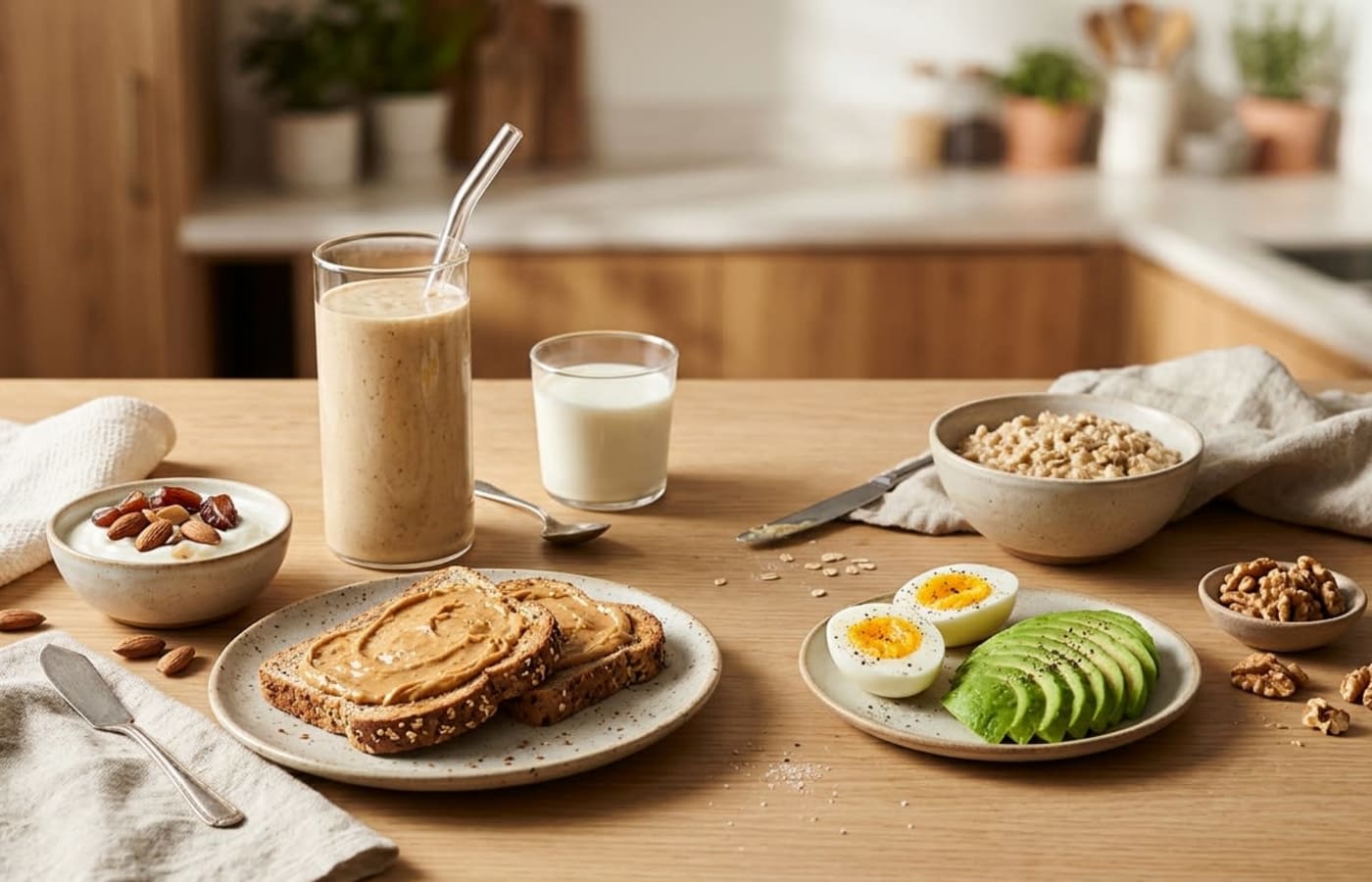
This is why calorie density matters. Calorie-dense foods provide more energy in a relatively small portion. A tablespoon of peanut butter, for example, can add energy to toast or a smoothie without requiring another full meal.
If you want to understand this concept in more detail, read our guide to what calorie density means and how low- and high-calorie-density foods compare.
The difference between eating more food and getting more calories
Approach | What it involves | Why it may matter |
|---|---|---|
Increasing meal size | Eating larger portions at breakfast, lunch and dinner | Can be difficult when appetite is limited |
Increasing calorie density | Adding nuts, oils, dairy, nut butter or cheese to existing meals | Raises energy intake without greatly increasing food volume |
Adding nourishing snacks | Eating smaller snacks between main meals | Creates additional opportunities to eat |
Using nutritious drinks | Having milk-based smoothies or shakes between meals | Can be easier than eating another solid meal |
The goal is not to eat as much as possible in one sitting. It is to build a routine that provides enough energy and nutrients consistently.
2. Why You May Have a Small Appetite
Before changing your diet, it helps to understand why you rarely feel hungry. Some people naturally prefer smaller meals, while others experience a reduced appetite because of lifestyle, medication, illness or digestive symptoms.
Common reasons for a low appetite
Irregular eating habits: Skipping meals or eating at unpredictable times can make it difficult to establish a consistent routine.
Stress and emotional factors: Stress, anxiety and low mood can affect appetite and interest in food.
Large amounts of fluid before meals: Water, tea, coffee and other drinks can make some people feel full before they have eaten.
Digestive discomfort: Bloating, reflux, nausea, constipation and other gastrointestinal symptoms may reduce the desire to eat.
Medication effects: Some medicines can influence appetite, taste, nausea or digestion.
Illness or underlying health conditions: Infections and certain chronic conditions can affect appetite and body weight.
High activity without sufficient food: Someone who walks, works physically or exercises regularly may use more energy than they realise.
There is an important distinction between naturally having a small appetite and experiencing a new or worsening loss of appetite. If your appetite has changed unexpectedly, do not assume that you simply need a better weight gain diet. The underlying reason may need attention.
Persistent early fullness also deserves attention. The medical term early satiety describes feeling full after eating only a small amount. It can sometimes be associated with digestive or other medical conditions. See the Cleveland Clinic guide to early satiety for further information.
3. How Weight Gain Works When You Eat Very Little
Your body needs energy for basic functions such as breathing, circulation, temperature regulation, digestion and movement. It also uses energy during daily activities and exercise.
When your average energy intake remains higher than your energy expenditure, your body can gradually gain weight. When intake consistently falls below expenditure, weight may decrease.
This is why a weight gain diet needs to provide enough calories consistently, rather than relying on occasional large meals.
Step 1: Estimate your maintenance calories
Your maintenance calories are an estimate of the daily energy intake needed to maintain your current weight. They vary with age, sex, height, body weight, activity level and individual physiology.
Use the MacrosMeasure TDEE calculator to estimate your total daily energy expenditure. Treat the result as a starting estimate rather than an exact measurement.
Step 2: Add a manageable calorie surplus
The NHS suggests that adults trying to gain weight may begin by adding around 300–500 calories per day. This is a general starting guideline, not a target that everyone must follow immediately.
If your appetite is very limited, you may find it easier to build up gradually. For example, you could first add a small nourishing snack or enrich one meal, then increase your intake again as your routine becomes comfortable.
Do not force yourself to eat beyond comfortable limits. If you cannot meet your needs despite trying smaller meals and calorie-dense foods, a registered dietitian or doctor can help identify a suitable approach.
Step 3: Make the extra calories nutritious
It is possible to gain weight by frequently eating sweets, fried snacks and sugary drinks. However, these foods should not become the foundation of your diet. Your body also needs protein, essential fats, carbohydrates, vitamins, minerals and fibre.
A more balanced weight gain plan includes:
Protein from eggs, dairy, chicken, fish, meat, beans and lentils.
Carbohydrates from rice, roti, oats, potatoes, bread and fruit.
Energy-rich fats from nuts, seeds, peanut butter, olive oil and suitable cooking oils.
Fruit and vegetables for vitamins, minerals and fibre.
For more help estimating your energy needs, see our BMI calculator and BMR and TDEE tools.
4. Best Calorie-Dense Foods for a Small Appetite
When you get full quickly, the most useful foods are often those that add meaningful calories and nutrients without requiring a large portion.
Instead of completely changing your meals, look for small additions. Mix nuts into porridge, add cheese to eggs, spread peanut butter on toast or enrich a milkshake with oats.
High-calorie foods to include in your diet
Food | Easy serving idea | How to use it |
|---|---|---|
Peanut butter | 1–2 tablespoons | Spread on toast or blend into a smoothie |
Almonds and walnuts | A small handful | Eat between meals or add to yoghurt |
Whole milk | 1 glass | Use in porridge, tea, coffee or smoothies |
Full-fat yoghurt | 1 small bowl | Combine with banana, dates or nuts |
Eggs | 1–2 eggs | Prepare an omelette or scrambled eggs |
Cheese | A small portion | Add to sandwiches, eggs or potatoes |
Dates | 2–4 dates | Pair with milk, yoghurt or nuts |
Avocado | Half an avocado | Add to toast or sandwiches |
Olive or other cooking oil | A measured drizzle | Mix into rice, vegetables or cooked meals |
Oats | A small bowl | Cook with milk and add nut butter |
These are examples, not fixed serving prescriptions. Your portions should reflect your calorie needs, preferences, digestion and any medical dietary restrictions.
Pakistani foods that can support healthy weight gain
You do not need expensive imported foods or specialist weight gain products. Many familiar Pakistani foods can fit into a nutritious calorie-surplus diet.
Egg paratha: Provides carbohydrates, protein and energy. Add yoghurt or a glass of milk if tolerated.
Chicken or beef keema: A useful protein-rich filling for roti, paratha or sandwiches.
Daal with rice: Combines plant protein and carbohydrates. Add yoghurt or a little oil to increase energy.
Chana chaat: Provides protein and fibre. Add yoghurt and a suitable dressing if you need more energy.
Milk and banana shake: A convenient way to combine dairy, fruit and extra ingredients such as peanut butter.
Khichdi: A soft, familiar meal that can be enriched with yoghurt, egg or another protein source.
Dates and nuts: Compact snacks that are easy to carry and eat between meals.
Traditional foods can be adjusted to your needs without making your diet dependent on fried foods or excessive added sugar.
5. How to Add Calories Without Eating Bigger Meals
This is one of the most important strategies for anyone who struggles to eat enough. Rather than adding another large plate, increase the energy content of meals you already enjoy.
Use food fortification
Food fortification in this context means adding ingredients that increase calories and sometimes protein to your usual meals. It is a practical strategy used in clinical nutrition guidance for people with small appetites.
Your usual food | Small addition | Why it helps |
|---|---|---|
Oats or porridge | Whole milk, nuts or peanut butter | Adds energy and can increase protein |
Scrambled eggs | Cheese or milk | Increases energy and protein |
Rice or pulao | A measured amount of oil | Raises calorie content without much extra volume |
Mashed potatoes | Milk, butter or cheese | Makes the dish more energy-dense |
Vegetable soup | Milk, yoghurt or blended beans | Adds energy and protein |
Yoghurt | Dates, nuts or dried fruit | Creates a more substantial snack |
Roti or toast | Peanut butter, cheese or avocado | Adds calories without another full meal |
Choose smaller portions with more nutritional value
If a large plate makes you lose interest in eating, begin with a smaller portion containing a source of protein, carbohydrates and fat. You can have another small serving later if you feel comfortable.
For example, instead of trying to finish a very large plate of plain rice, you could eat a smaller serving of chicken pulao with yoghurt and have a milk-based snack later.
Be careful with drinks before meals
Hydration remains important, but some people feel full when they drink a large amount immediately before eating. If that happens to you, try drinking most of your fluids between meals and having your main meal before a large beverage.
Do not deliberately restrict water or ignore thirst. The aim is simply to arrange drinks in a way that does not interfere with your ability to eat.
6. High-Calorie Snacks for Weight Gain
Snacks are not just optional extras when you have a small appetite. They can be an important part of reaching your daily calorie and protein needs.
Instead of relying on plain biscuits, tea or low-calorie snacks, choose combinations that provide more energy and useful nutrients.
Sweet snack ideas
Banana with peanut butter.
Full-fat yoghurt with chopped dates and almonds.
Rice pudding made with milk.
Whole-milk smoothie with oats and banana.
Toast with peanut butter and sliced banana.
A small bowl of homemade custard with nuts.
Savoury snack ideas
Boiled eggs with a slice of bread.
Cheese sandwich.
Hummus with pita or roti.
Small chicken sandwich.
Roasted chana with nuts.
Yoghurt with a small portion of savoury chana.
Simple snack combinations
Combination | What it provides |
|---|---|
Milk + dates | Energy, carbohydrates and protein from milk |
Yoghurt + walnuts | Protein, fats and energy |
Egg + toast | Protein and carbohydrates |
Banana + peanut butter | Carbohydrates and energy-rich fats |
Cheese + crackers | Protein, fat and carbohydrates |
Prepare one or two snacks in advance so that you do not have to make a complicated food decision every time you need to eat.
7. Homemade Weight Gain Smoothies
For some people, drinking a nourishing smoothie is easier than eating another solid meal. Smoothies can combine milk, yoghurt, fruit, oats and nut butter in a relatively small serving.
They are especially useful between meals, but they should complement your normal food intake rather than automatically replace every meal.
1. Banana and peanut butter smoothie
Ingredients:
1 ripe banana
1 glass of whole milk
1 tablespoon peanut butter
2 tablespoons oats
A little cinnamon, if desired
Preparation: Blend all ingredients until smooth. Adjust the thickness by adding more milk.
Why it works: Milk provides protein, banana and oats provide carbohydrates, and peanut butter increases energy density.
2. Date and milk smoothie
Ingredients:
1 glass whole milk
3–4 soft dates, with pits removed
2 tablespoons full-fat yoghurt
1 tablespoon ground almonds
Preparation: Soak firm dates in a little warm milk, then blend everything until smooth.
Why it works: Dates provide concentrated carbohydrates, while milk, yoghurt and almonds contribute protein and fats.
3. Yoghurt and banana smoothie
Ingredients:
1 banana
½ cup full-fat yoghurt
½–1 glass milk
1 tablespoon oats
A small handful of walnuts
Preparation: Blend until creamy. Serve chilled if you prefer.
Why it works: This combines dairy protein with fruit, oats and energy-rich nuts.
Important: Smoothies are not suitable for everyone. If dairy causes digestive symptoms, choose a suitable alternative with adequate protein and calories. If you have diabetes or another medical condition, discuss the ingredients and portions with your healthcare professional.
8. How to Get Enough Protein With a Small Appetite
Calories help create the conditions for weight gain, but protein is particularly important if your goal is to build or maintain muscle rather than simply increase body weight.
Protein supplies amino acids that the body uses to repair tissues and support muscle protein synthesis. However, eating more protein than you need does not automatically produce more muscle. Your overall diet, energy intake, training and recovery all matter.
Protein-rich foods that fit into smaller meals
Food | Easy way to include it |
|---|---|
Eggs | Omelette, boiled eggs or egg sandwich |
Milk | Milkshake, porridge or a glass between meals |
Greek yoghurt | Small bowl with fruit or nuts |
Chicken | Small serving in a sandwich, wrap or rice dish |
Fish | Small serving with rice or potatoes |
Daal | Small bowl alongside rice or roti |
Paneer | Add to a sandwich, curry or wrap |
Soy foods | Tofu or soy milk with suitable protein content |
How much protein do you need?
Protein requirements depend on body weight, age, health and activity. For healthy adults who exercise regularly, the International Society of Sports Nutrition position stand reports that approximately 1.4–2.0 grams of protein per kilogram of body weight per day is sufficient for most exercising individuals. This is an exercise-focused range, not a universal prescription for everyone.
If you are not doing resistance training, your needs may be different. People with kidney disease or other medical conditions may also need individual protein advice.
Use the MacrosMeasure protein calculator to estimate a starting target, and explore our guide to the best food-first protein sources for muscle gain.
Spread protein across the day
You do not need to consume all your protein at dinner. Include a source at breakfast, lunch and dinner, then use snacks to help fill any remaining gap.
For someone with a small appetite, a glass of milk, a small yoghurt bowl or an egg sandwich may be easier to manage than a very large meat-based meal.
9. How Often Should You Eat to Gain Weight?
There is no single meal frequency that works for everyone. However, people with a small appetite often find it easier to spread food across several smaller eating occasions instead of relying on three large meals.
A practical starting pattern is three small meals and two or three nourishing snacks. Some people may prefer five or six smaller eating occasions throughout the day.
Eating occasion | Example |
|---|---|
Breakfast | Eggs, paratha or toast and milk |
Mid-morning snack | Banana with yoghurt or nuts |
Lunch | Chicken, daal or beans with rice or roti |
Afternoon snack | Milkshake or peanut butter toast |
Dinner | Fish, chicken or paneer with potatoes or rice |
Optional evening snack | Milk, yoghurt or a small rice pudding |
Eating every two to three hours is one option, not a rule that everyone must follow. If you feel comfortable with slightly longer gaps, you can arrange your eating occasions around your own appetite and schedule.
Pay attention to the timing of drinks, too. If tea, coffee or water immediately before a meal makes you feel full, move larger drinks to between meals while maintaining adequate hydration.
10. A Sample One-Day Weight Gain Meal Plan
The following example uses familiar foods and smaller eating occasions. It is designed to demonstrate how someone with a small appetite might distribute food throughout the day.
It is not a personalised calorie prescription. Portion sizes, cooking methods and ingredients change the calorie and protein content considerably. Adjust the quantities to your individual needs.
Time | Meal | Purpose |
|---|---|---|
7:30 AM | One or two eggs, a small paratha or toast, and a glass of milk | Starts the day with protein and energy |
10:30 AM | Banana with a small handful of almonds | Adds energy without another large meal |
1:00 PM | Chicken or daal with rice or roti and yoghurt | Provides protein and carbohydrates |
4:00 PM | Homemade banana and peanut butter smoothie | Provides a convenient source of additional energy |
7:30 PM | Fish, chicken or paneer with potatoes or rice and cooked vegetables | Provides a balanced main meal |
9:30 PM | Small bowl of full-fat yoghurt or milk | An optional snack if more food is needed |
How to customise this plan
If breakfast is your strongest appetite window, make breakfast your largest meal.
If you struggle with solid food in the afternoon, try a nourishing smoothie.
If you cannot finish lunch, divide it into two smaller portions.
If dairy causes discomfort, choose a suitable alternative.
If your weight is not increasing, review your total intake and adjust gradually.
You can calculate the nutrition content of your own meals using the MacrosMeasure recipe nutrition calculator. This is particularly useful for homemade dishes such as paratha, pulao, daal, chicken curry and smoothies, where ingredients and oil quantities can vary.
11. How to Track Your Weight Gain Progress
It is easy to become frustrated when the scale does not change after a few days. Healthy weight gain is a gradual process, and daily body weight naturally fluctuates with hydration, food intake, digestion and other factors.
Use a consistent weighing routine
Weigh yourself under similar conditions, preferably in the morning after using the bathroom.
Use the same scale and similar clothing conditions.
Record your weight rather than relying on memory.
Compare weekly averages or longer-term trends instead of reacting to one reading.
What if your weight does not increase?
If your average weight remains unchanged over a few weeks, your current intake may be close to your maintenance needs. Review your portions, snacks, drinks and cooking ingredients before making a small increase.
For example, you could add another snack, increase the amount of milk in your smoothie or add a little more nut butter to breakfast.
Keep your calorie and macronutrient estimates organised with the MacrosMeasure macros calculator and TDEE calculator.
12. Common Weight Gain Mistakes to Avoid
1. Trying to eat three enormous meals
Large portions can feel overwhelming when your appetite is limited. Smaller meals and planned snacks may be easier to maintain.
2. Depending entirely on junk food
Fast food, sweets and sugary drinks can increase calorie intake, but they do not provide the balanced nutrition needed for long-term health. Use nutrient-rich foods as your foundation.
3. Drinking too much immediately before meals
If fluids make you feel full, adjust their timing. Have nourishing drinks between meals and keep your normal hydration needs in mind.
4. Eating protein but not enough total calories
Protein is important, but a high-protein diet alone will not guarantee weight gain. You also need sufficient total energy from carbohydrates, fats and protein.
5. Skipping snacks because you are not hungry
When appetite is limited, waiting until you feel extremely hungry may leave too few opportunities to eat. A flexible routine can help you eat consistently.
6. Expecting immediate results
Weight changes take time. Focus on sustainable habits and monitor longer-term trends rather than trying to gain several kilograms in a short period.
7. Ignoring persistent digestive symptoms
Repeated nausea, vomiting, abdominal pain, bloating or early fullness should not simply be treated by adding more calories. These symptoms may need medical assessment.
13. When a Small Appetite Needs Medical Attention
A small appetite is not always a medical problem. However, a persistent or unexplained change in appetite can sometimes be a sign that something else is affecting your health.
Speak with a healthcare professional if you experience:
Unintentional or unexplained weight loss.
A sudden or persistent reduction in appetite.
Feeling full after only a few bites on a regular basis.
Ongoing nausea, vomiting, abdominal pain or bloating.
Difficulty swallowing or difficulty keeping food down.
Persistent diarrhoea or constipation alongside weight changes.
Unusual fatigue, weakness or other symptoms occurring with poor intake.
Some people may need a dietitian-led plan, particularly if they are underweight, recovering from illness or at risk of malnutrition. If you have lost a significant amount of weight unintentionally, it is important to investigate the cause rather than relying only on a high-calorie diet.
For further guidance, see the NHS guide to healthy ways to gain weight and the healthdirect guide to being underweight.
The Bottom Line
Learning how to gain weight with a small appetite does not mean forcing yourself to eat oversized meals or following an unrealistic diet plan. It means finding practical ways to increase your daily energy and nutrient intake while respecting your appetite and digestive comfort.
Start with foods that provide more calories in smaller portions: whole milk, yoghurt, eggs, nuts, peanut butter, dates, cheese, avocado and suitable cooking oils. Add these ingredients to meals you already enjoy. Include nourishing snacks, use homemade smoothies when convenient and distribute protein across your day.
Estimate your calorie needs, make gradual adjustments and monitor your weight over time. If you want to gain muscle, include appropriate resistance training and allow enough time for recovery.
Most importantly, do not ignore a persistent loss of appetite or unexplained weight change. A healthcare professional can help identify the cause and make sure your weight gain plan is safe for your circumstances.
Frequently Asked Questions
How can I gain weight with a small appetite?
Choose calorie-dense foods such as nuts, peanut butter, whole milk, eggs, cheese, dates and avocado. Eat smaller meals more frequently, add nourishing snacks and use homemade smoothies between meals. Increase your daily intake gradually according to your needs.
What are the best high-calorie foods for someone with a small appetite?
Good options include peanut butter, almonds, walnuts, whole milk, full-fat yoghurt, cheese, eggs, avocado, dates and cooking oils. These foods can add energy to relatively small portions.
Can I gain weight without eating large meals?
Yes. You can increase your energy intake through smaller, more frequent meals, nourishing snacks and calorie-dense additions to familiar foods. Smoothies and milk-based drinks may also help if you find them easier to consume than solid food.
How many times should I eat in a day to gain weight?
There is no mandatory number. A useful starting pattern for someone with a small appetite is three smaller meals and two or three snacks. Some people prefer five or six smaller eating occasions. Choose a routine you can maintain.
Are smoothies good for weight gain?
Yes. Homemade smoothies containing milk, yoghurt, banana, oats, dates or peanut butter can provide energy and nutrients in a convenient serving. They are best used to supplement meals and snacks rather than replace your entire diet.
How many extra calories should I eat to gain weight?
The NHS suggests that adults may try adding around 300–500 calories per day as a general starting point. Your individual requirement depends on your body size, activity, health and current intake. If you have a very small appetite, build up gradually with professional guidance when needed.
Why do I feel full quickly even when I have not eaten much?
Some people naturally prefer smaller meals, but repeated early fullness can also be associated with digestive symptoms, medication effects or an underlying health condition. If it is persistent, new or accompanied by weight loss, nausea or abdominal pain, speak with a healthcare professional.
Can I gain muscle if I have a small appetite?
Yes, it may be possible. You need enough total energy, adequate protein, progressive resistance training and recovery. Smaller protein-rich meals and snacks can help you meet your needs without relying on very large portions.
Is milk good for weight gain?
Milk provides energy, protein and several essential nutrients. Whole milk can be a convenient choice if you tolerate dairy and need more calories. You can also use it in porridge, smoothies, milkshakes and other meals.
Should I take a mass gainer if I have a small appetite?
A mass gainer is not essential. Many people can increase their calorie intake using ordinary foods and homemade smoothies. If you are considering a supplement, check its ingredients and suitability with a qualified healthcare professional, especially if you have a medical condition.
What should I do if I cannot gain weight even after eating more?
Review your actual food intake, portion sizes and activity level. If your weight continues to fall or you cannot gain weight despite consistent efforts, consult a doctor or registered dietitian. They can assess possible medical, digestive or nutritional causes.
References & Sources
NHS. Healthy ways to gain weight. Read the NHS guidance.
Cleveland Clinic. How To Gain Weight Fast: Safe, Healthy Strategies. Read the article.
Cornwall and Isles of Scilly Integrated Care System. Food first advice for adults with a small appetite. Read the nutrition guidance.
Mayo Clinic. Underweight? See how to add pounds healthfully. September 25, 2025. Read the guidance.
Cleveland Clinic. Early Satiety: Causes, Treatment & Long-Term Complications. Read the medical overview.
Jäger, R. et al. (2017). International Society of Sports Nutrition Position Stand: protein and exercise. Journal of the International Society of Sports Nutrition, 14, 20. Read the research paper.
Healthdirect Australia. What to do if you are underweight. Read the guidance.
MacrosMeasure articles are intended for general educational purposes. Individual calorie, protein and weight-gain requirements vary. Consult a qualified healthcare professional for personalised advice, particularly if you have unexplained weight loss, persistent poor appetite or an underlying medical condition.
Calculate your own numbers — free.
18 science-backed calculators covering everything in this article and more.