Fiber-Maxxing Explained: How Much Fiber Do You Really Need Every Day?
Fiber has become one of the biggest conversations in nutrition. But is eating more always better? Here is what the research says about daily fiber needs, gut health, weight management, different types of fiber, and how to increase your intake without making yourself uncomfortable.
Table of Contents
Introduction: Is Fiber the New Protein?
For years, protein dominated nutrition conversations. People began checking protein labels, adding Greek yogurt to breakfast, and looking for ways to increase their daily protein intake.
Now another nutrient is receiving more attention: dietary fiber.
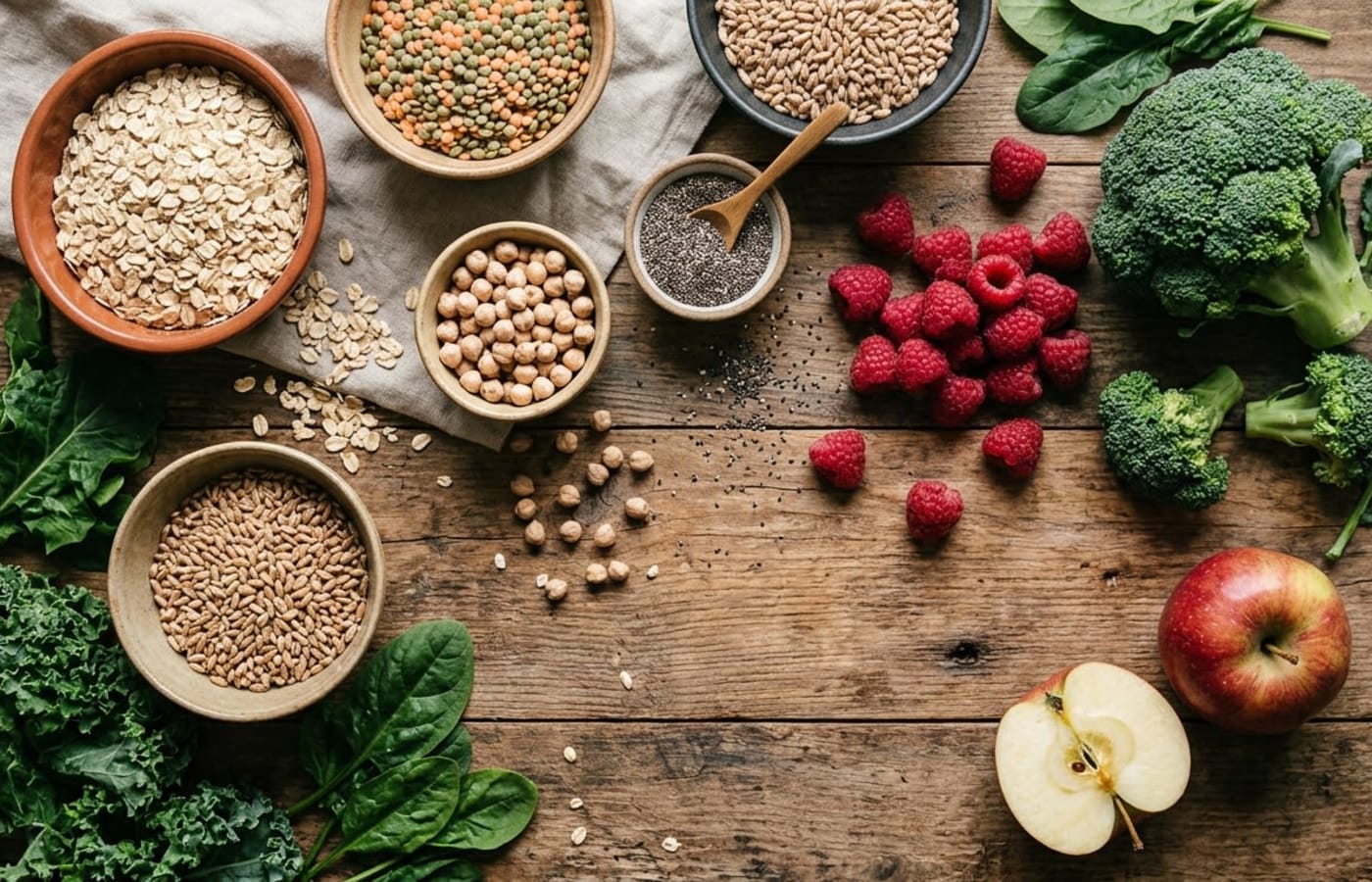
The social-media trend known as fiber-maxxing encourages people to deliberately increase the amount of fiber they eat. It often involves adding beans, lentils, oats, chia seeds, vegetables, berries, and whole grains to everyday meals.
There is a good scientific reason behind the renewed interest. Fiber is not simply a nutrient that helps you go to the bathroom. Different types of dietary fiber influence digestion, stool consistency, gut microbial activity, blood cholesterol, and post-meal blood glucose responses.
A 2025 umbrella review published in Clinical Nutrition examined 33 meta-analyses covering 38 health outcomes and more than 17 million individuals. Higher dietary fiber intake was associated with lower risks across several chronic disease outcomes. However, the strength of evidence differed between outcomes, and observational associations should not automatically be interpreted as proof of causation.
That distinction matters. Fiber is beneficial, but it is not a miracle ingredient, and eating extremely large quantities is not automatically healthier.
The more useful question is not how to eat the most fiber possible. It is how to consistently reach an appropriate intake through a varied diet that your digestive system tolerates.
1. What Is Fiber-Maxxing?
Fiber-maxxing is an informal nutrition trend built around increasing daily dietary fiber intake.
The idea is straightforward: include more fiber-rich foods throughout the day rather than relying mainly on refined grains, highly processed snacks, and low-fiber meals.
Common fiber-maxxing foods include:
Oats and barley
Lentils, chickpeas, and beans
Chia seeds and ground flaxseed
Apples, pears, raspberries, and other berries
Broccoli, carrots, leafy greens, and other vegetables
Whole-wheat bread and brown rice
Nuts and seeds
Unlike a restrictive diet, a sensible fiber-focused eating pattern does not require eliminating entire food groups. It is about improving the quality and variety of the foods already on your plate.
However, the social-media version can sometimes encourage people to add large amounts of fiber very quickly. That is where the trend can become uncomfortable.
Someone who normally eats very little fiber may experience gas, bloating, abdominal discomfort, or changes in bowel habits after suddenly adding several servings of beans, bran, and seeds.
The goal should be gradual improvement, not an overnight transformation.
2. Why Dietary Fiber Is Getting So Much Attention
The interest in fiber is connected to several areas of nutrition research.
The gut microbiome connection
Your digestive tract contains a complex community of microorganisms, including bacteria that use certain dietary fibers as fuel.
Some fibers are fermented by intestinal microorganisms. This process can produce short-chain fatty acids, including acetate, propionate, and butyrate.
These compounds are involved in several biological processes. Butyrate, for example, is an important energy source for cells lining the colon. Short-chain fatty acids also participate in communication between the gut and other tissues.
Not every fiber behaves in the same way, and not every person has the same microbial response. This is one reason dietary variety matters.
The low-fiber diet problem
Many modern eating patterns rely heavily on refined grains and packaged foods while providing relatively few legumes, whole grains, fruits, and vegetables.
This can make it difficult to reach recommended fiber intake.
For context, U.S. dietary guidance commonly uses an intake of approximately 14 grams of fiber per 1,000 calories as a reference. Many adults consume substantially less than recommended.
The exact amount an individual needs depends on age, sex, energy intake, and the guideline being used.
Fiber is not a new discovery
The current trend may be new, but research into dietary fiber and human health has been developing for decades.
A 2025 umbrella review in Clinical Nutrition found that 29 of 38 health outcomes examined across included meta-analyses had statistically significant inverse associations with higher fiber consumption. The strongest evidence classifications were not identical for every outcome.
This is an important point: the research supports fiber-rich dietary patterns, but it does not mean that every fiber supplement or every high-fiber food produces the same effect.
3. What Does Fiber Actually Do in Your Body?
Fiber is a broad category of carbohydrate-related substances that are not fully digested and absorbed in the small intestine.
Instead of being broken down completely like many digestible carbohydrates, different fibers retain water, alter the physical structure of intestinal contents, or become substrates for microbial fermentation.
A. Supports regular bowel movements
Some fibers increase stool bulk, while others retain water and soften stool.
These effects can help support regular bowel movements.
For example, wheat bran contains substantial insoluble fiber, while psyllium is a gel-forming fiber that can improve stool consistency.
The response depends on the type of fiber, amount consumed, fluid intake, and individual digestive function.
B. Feeds certain gut microorganisms
Some fibers are fermented by bacteria in the large intestine.
The resulting short-chain fatty acids are involved in gut physiology and host metabolism.
However, it is inaccurate to say that every fiber feeds every beneficial bacterium or that a single fiber will automatically improve everyone's microbiome.
C. Can help reduce LDL cholesterol
Certain soluble, viscous fibers can reduce cholesterol absorption and influence bile acid metabolism.
Oats and barley contain beta-glucan, a soluble fiber with evidence supporting reductions in LDL cholesterol when consumed in sufficient amounts as part of an appropriate dietary pattern.
The effect is not identical for all fiber types.
D. Can influence post-meal blood glucose
Viscous fibers can slow the movement of food through the digestive tract and slow the absorption of glucose in some circumstances.
This can reduce the speed of post-meal glucose increases.
The size of the effect depends on the food, meal composition, preparation, and the person's metabolic health.
E. May support fullness
High-fiber foods often require more chewing and may add volume to meals.
Some fibers also form gels or influence gut-derived signals involved in appetite regulation.
This may help some people feel satisfied after eating, although fiber alone does not guarantee weight loss.
4. Soluble vs. Insoluble Fiber: What's the Difference?
The terms soluble and insoluble describe how fiber behaves in water. They are useful, but they do not capture every property that matters.
Some soluble fibers are highly viscous, some are readily fermented, and some are not. Insoluble fibers also differ in their physical structure and fermentability.
Feature | Soluble fiber | Insoluble fiber |
|---|---|---|
Behavior in water | Some dissolve or form gels | Generally does not dissolve |
Common role | May slow digestion and influence cholesterol and glucose responses | Adds bulk and supports bowel regularity |
Food sources | Oats, barley, beans, apples, citrus | Wheat bran, vegetable skins, whole grains |
Fermentation | Varies by fiber type | Varies by fiber type |
Example | Beta-glucan, psyllium | Cellulose, some bran fibers |
Soluble fiber foods
Examples include:
Oats
Barley
Beans
Lentils
Apples
Pears
Citrus fruits
Chia seeds
Insoluble fiber foods
Examples include:
Wheat bran
Whole-wheat grains
Vegetable skins
Nuts
Some seeds
Leafy vegetables
You do not need to calculate the exact soluble-to-insoluble ratio of every meal. A varied diet containing different plant foods is a more practical strategy.
5. How Much Fiber Should You Eat Every Day?
There is no single universal target that applies to every person.
One commonly used reference is 14 grams of fiber per 1,000 calories consumed. This is the basis for several adult intake recommendations.
For adults aged 19–50, commonly cited U.S. adequate intake values are:
Group | Daily fiber reference |
|---|---|
Women | 25 g |
Men | 38 g |
Women during pregnancy | 28 g |
Women during lactation | 29 g |
These are reference values, not a requirement to force the same amount into every person's diet.
Age, energy needs, health conditions, and national dietary recommendations can change the appropriate target.
For example, someone consuming 1,800 calories may use the 14 g per 1,000 kcal reference to estimate approximately 25 grams of fiber per day.
A person consuming 2,500 calories would estimate approximately 35 grams using the same calculation.
The practical lesson is to choose a reasonable target based on your needs and work toward it consistently.
6. The Best High-Fiber Foods to Add to Your Diet
The most useful fiber sources are foods that provide additional nutrients, not just fiber in isolation.
Food | Approximate fiber per typical serving |
|---|---|
Cooked lentils, ½ cup | 7–8 g |
Cooked black beans, ½ cup | 7–8 g |
Chia seeds, 1 tablespoon | 4–5 g |
Raspberries, 1 cup | 8 g |
Pear with skin, medium | 5–6 g |
Apple with skin, medium | 4–5 g |
Oatmeal, 1 cup cooked | 4 g |
Broccoli, 1 cup cooked | 5 g |
Almonds, 1 ounce | 3–4 g |
Values are approximate and vary with food variety, preparation, and serving size. Check food labels or a reliable food-composition database for precise calculations.
Legumes: an especially useful option
Lentils, chickpeas, and beans provide both fiber and plant protein.
They can be added to soups, salads, curries, wraps, and rice dishes.
For people who are not used to eating legumes, beginning with smaller portions may improve tolerance.
Whole grains
Oats, barley, whole-wheat bread, and brown rice can increase fiber intake without requiring a completely different meal pattern.
Replacing some refined grains with whole-grain alternatives is often easier than adding multiple new foods.
Fruits and vegetables
Whole fruits generally provide more fiber than fruit juice because the fiber remains in the edible fruit.
Eating the skin of fruits such as apples and pears, when appropriate and washed, can also contribute additional fiber.
7. Does Fiber Help With Weight Management?
Fiber can support a weight-management strategy, but it is not a fat-burning substance.
Its potential contribution comes from several mechanisms.
Meal volume and fullness
Many high-fiber foods contain substantial water and physical volume relative to their energy content.
Vegetables, fruits, beans, and whole grains can therefore help create satisfying meals.
Slower digestion
Some viscous fibers slow gastric emptying or nutrient absorption.
This may influence hunger and post-meal responses, although effects differ by fiber type and individual.
Food quality
Choosing beans, whole grains, fruits, and vegetables more often can improve overall dietary quality.
These foods may replace some energy-dense, low-fiber foods.
However, nuts, seeds, and some high-fiber snack products are also calorie-dense. Adding them without considering total energy intake can increase calories rather than reduce them.
Bottom line: Fiber can make a balanced calorie-controlled eating pattern easier to follow, but weight change still depends on long-term energy balance and other factors.
8. Fiber and Blood Sugar: What Does the Evidence Say?
Fiber can influence the rate at which carbohydrates are digested and absorbed.
Viscous soluble fibers are particularly relevant because they can slow the movement of nutrients through the digestive tract.
For example, beta-glucan from oats and barley has been studied for its effects on post-meal glucose and blood cholesterol.
But a high-fiber food is not automatically carbohydrate-free or suitable in unlimited quantities.
Beans, oats, fruit, and whole grains all contain carbohydrates. Their fiber content changes the way the food behaves in the body, but total carbohydrate intake still matters for people managing diabetes.
People using glucose-lowering medications should discuss major dietary changes with their healthcare team, particularly if changes in food intake affect medication needs.
9. How to Increase Fiber Without Bloating
This is one of the most important parts of fiber-maxxing.
Increasing fiber too quickly can cause gas, bloating, abdominal discomfort, and changes in bowel habits.
The digestive system may need time to adapt.
Step 1: Increase gradually
If your current intake is low, do not jump immediately to 30–40 grams.
Add one fiber-rich food or a modest portion at a time. Increase further as tolerated.
Step 2: Drink adequate fluids
Fiber and fluid work together, particularly for fibers that absorb water.
If you increase fiber substantially while drinking too little, you may experience constipation or discomfort.
Fluid needs vary with body size, activity, climate, and health status. There is no single water target that is right for everyone.
Step 3: Spread fiber across meals
Instead of consuming most of your fiber in one meal, distribute it throughout the day.
For example:
Breakfast: oats and fruit
Lunch: lentils or beans
Snack: pear or nuts
Dinner: vegetables and whole grains
Step 4: Prepare legumes appropriately
Rinsing canned beans and soaking and thoroughly cooking dried legumes may improve tolerance for some people.
Start with smaller portions if legumes usually cause gas.
Step 5: Notice individual triggers
Some high-fiber foods contain fermentable carbohydrates that may worsen symptoms in people with irritable bowel syndrome or other digestive sensitivities.
If a particular food causes symptoms, consider the portion size and food type rather than assuming all fiber is unsuitable.
Persistent or severe symptoms deserve medical assessment.
10. A Practical One-Day High-Fiber Eating Example
The following is an illustrative meal pattern, not an individualized prescription. Fiber values vary with ingredients and portions.
Meal | Example | Approximate fiber |
|---|---|---|
Breakfast | Oatmeal with chia seeds and berries | 10–12 g |
Lunch | Lentil soup with vegetables | 8–10 g |
Snack | One medium pear | 5–6 g |
Dinner | Brown rice with broccoli and chickpeas | 8–10 g |
Estimated daily total | 31–38 g |
You can adapt this pattern to local foods. Lentil curry, chickpea salad, whole-wheat roti, seasonal fruit, and vegetable dishes can all contribute.
The best eating plan is one that fits your food preferences, budget, culture, and digestive tolerance.
11. When Too Much Fiber Can Become a Problem
More is not always better.
A sudden increase in fiber may lead to:
Excessive gas
Bloating
Abdominal cramps
Changes in stool frequency
Constipation, especially when fluid intake is inadequate
Diarrhea in some individuals
Certain medical conditions require more careful dietary planning. These can include intestinal narrowing, active inflammatory bowel disease, recent gastrointestinal surgery, and some disorders affecting gut motility.
People with such conditions should seek individualized advice before making substantial changes.
A high-fiber diet is not a universal treatment for every digestive complaint.
12. Fiber Supplements vs. Whole Foods
Fiber supplements can be useful in certain situations, but they do not replace the nutritional variety provided by whole foods.
Feature | Whole-food fiber | Fiber supplements |
|---|---|---|
Fiber content | Varies by food | Often more concentrated |
Other nutrients | Vitamins, minerals, and other plant compounds | Usually limited |
Variety | Naturally provides multiple fiber types | Often one main fiber |
Convenience | Requires meal planning | Easy to take |
Best use | Foundation of everyday diet | Targeted support when appropriate |
Common supplements include psyllium, inulin, methylcellulose, and partially hydrolyzed guar gum.
These are not interchangeable. They differ in viscosity, fermentability, and evidence for particular outcomes.
If you take medications, ask a pharmacist or clinician whether a fiber supplement needs to be separated from your medication schedule.
13. Frequently Asked Questions
Is fiber-maxxing actually healthy?
It can be a useful way to encourage greater consumption of legumes, fruits, vegetables, seeds, and whole grains. However, extreme intake or rapid increases can cause digestive discomfort.
How much fiber should I eat daily to improve gut health?
Common adult reference values include approximately 25 grams daily for women and 38 grams for men aged 19–50 in U.S. guidance. Individual requirements vary, and more is not automatically better.
What is the best high-fiber food?
There is no single best food. Lentils, beans, raspberries, chia seeds, oats, and many vegetables are practical sources. Variety is more important than relying on one food.
Does fiber help with belly fat?
Fiber does not selectively burn abdominal fat. It can support fullness and dietary quality, which may help with overall weight management.
Can I eat 30 grams of fiber every day?
Many adults can work toward that amount, but the appropriate target depends on age, sex, energy intake, medical conditions, and tolerance. Increase gradually.
Does fiber cause bloating?
It can, particularly when intake rises suddenly or when someone is sensitive to specific fermentable carbohydrates. Smaller portions and gradual changes may improve tolerance.
Is psyllium better than food fiber?
Psyllium has evidence for certain outcomes, including bowel regulation and LDL cholesterol reduction. However, it does not provide the range of nutrients found in whole plant foods.
Are fruit juices a good source of fiber?
Most strained fruit juices contain much less fiber than whole fruit. Whole fruit is generally the better choice when the goal is increasing fiber intake.
14. Final Takeaway: Aim for Consistency, Not Extremes
Fiber-maxxing has brought attention to a nutrient that deserves a much bigger place in everyday nutrition.
The science supports a varied, fiber-rich eating pattern, but the goal should not be to consume the highest possible amount.
Start with foods you already enjoy. Add beans to lunch, choose oats for breakfast, include fruit as a snack, and make vegetables a regular part of dinner.
Build your intake gradually, drink adequate fluids, and pay attention to your digestive response.
A sustainable fiber habit is more valuable than a short-lived social-media challenge.
References and Further Reading
Veronese N, et al. The impact of dietary fiber consumption on human health: An umbrella review of evidence from 17,155,277 individuals. Clinical Nutrition. 2025;51:325–333. DOI: 10.1016/j.clnu.2025.06.021.
Xiang M, et al. Effects of Supplementation With Different Specificities of Dietary Fiber on Health-Related Indicators in Adults With Overweight or Obesity: A Systematic Review and Meta-analysis of Randomized Controlled Trials. Nutrition Reviews. 2025. DOI: 10.1093/nutrit/nuae193.
Balk EM, et al. Fiber Intake and Laxation in People With Normal Bowel Function. Agency for Healthcare Research and Quality. 2025.
Reynolds A, et al. Carbohydrate quality and human health: a series of systematic reviews and meta-analyses. The Lancet. 2019;393:434–445. DOI: 10.1016/S0140-6736(18)31809-9.
National Academies of Sciences, Engineering, and Medicine. Dietary Reference Intakes for Energy, Carbohydrate, Fiber, Fat, Fatty Acids, Cholesterol, Protein, and Amino Acids. 2005.
Calculate your own numbers — free.
18 science-backed calculators covering everything in this article and more.