In this guide
You've probably seen it on social media — someone posting a photo of pizza or ice cream captioned "still on track" and tagged #IIFYM. It looks like a loophole. It isn't quite that, but it's also not far off, and understanding exactly where the real flexibility lies is what separates people who use IIFYM successfully from people who use it as an excuse to eat poorly and wonder why their results stalled.
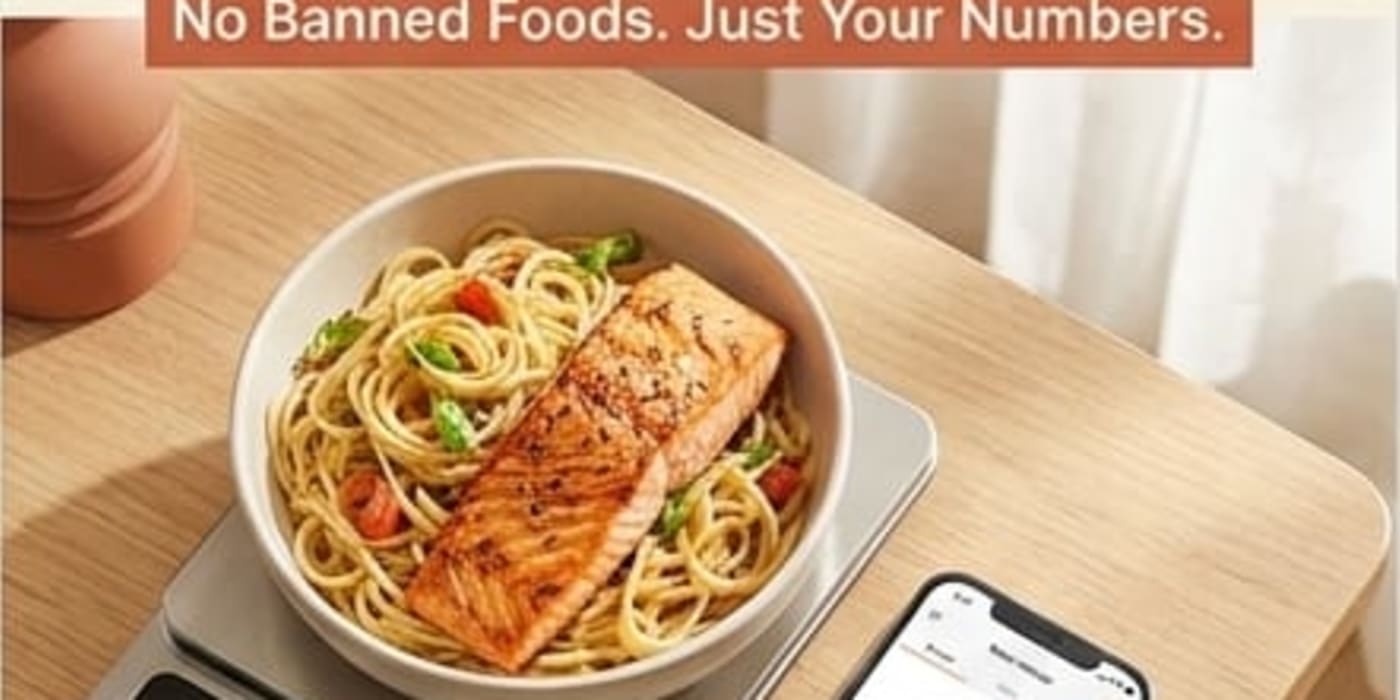
IIFYM — If It Fits Your Macros — is a flexible dieting approach where any food is allowed as long as your daily protein, carbohydrate, and fat totals hit your targets. Research consistently shows that when total calories and protein are matched, flexible dieting produces the same body composition results as rigid "clean eating" plans, with meaningfully better long-term adherence.
Use the free macro calculator to get your personal starting numbers — then this guide walks through exactly how to use them without falling into the traps that give flexible dieting its bad reputation.
What IIFYM Actually Means — And What It Doesn't
IIFYM originated in online bodybuilding communities in the early 2010s, as a direct response to rigid "clean eating" culture — the idea that only specific whole foods, eaten at specific times, could produce results. Bodybuilders grew tired of chicken-rice-broccoli monotony and began testing whether other foods could be included without derailing progress, as long as the underlying macronutrient totals stayed consistent.
The core mechanism is straightforward: body composition change is driven overwhelmingly by total calories and total protein intake, not by the specific foods those calories come from. This doesn't mean food quality is irrelevant — it means the relationship between food quality and body composition runs through macros and micronutrients, not through some independent property of "cleanliness."
Does Flexible Dieting Actually Work as Well as Clean Eating?
Yes — with an important caveat. Controlled studies comparing flexible and rigid dieting approaches consistently find comparable fat loss and muscle retention when calories and protein are equated between groups. The real difference between the approaches shows up in adherence: flexible dieting is associated with reduced binge-eating tendencies, lower food anxiety, and better long-term compliance than highly restrictive rigid plans.
The caveat: this equivalence holds when protein and total calories are actually matched. A flexible approach that quietly under-hits protein while over-relying on convenient processed carbs and fats will not produce the same body composition outcome as a well-executed rigid plan, even if total calories look identical on paper.
The 80/20 Rule — How Flexible Is Too Flexible?
The most widely used practical guideline within flexible dieting is the 80/20 rule: roughly 80% of daily calories from whole, minimally processed foods, and up to 20% from whatever else fits the remaining macro budget — treats, convenience foods, or social eating. This isn't a rigid law so much as a sustainable default that keeps fibre, micronutrients, and satiety in a healthy range while preserving genuine flexibility.
You can technically hit your macros eating nothing but protein shakes and candy. You shouldn't — not because it "breaks" IIFYM, but because you'll be hungry, low on fibre, and micronutrient-deficient long before you hit your calorie ceiling most days.
A practical fibre target of 25–35g daily alongside your macro numbers is one of the simplest guardrails that keeps flexible dieting genuinely healthy rather than just flexible in name.
Calculating Your IIFYM Macros in 4 Steps
| Step | What to Calculate | Formula or Target |
|---|---|---|
| 1. Find your TDEE | Total daily energy expenditure | Mifflin-St Jeor BMR × activity multiplier |
| 2. Set your calorie target | Deficit, surplus, or maintenance | 15–20% below TDEE for fat loss; 10–20% above for muscle gain |
| 3. Set protein first | Grams of protein per day | 0.7–1.0g per lb (1.6–2.2g/kg) of body weight |
| 4. Split the remainder | Carbs and fat from remaining calories | Fat at 20–30% of total calories; carbs fill the rest |
Protein is always set first because it's the macro most directly tied to muscle retention and satiety — everything else is built around it, not the other way round. The macro calculator runs this exact sequence automatically based on your stats and goal, and the protein intake calculator can fine-tune step 3 independently if you want to adjust it manually.
How Precise Do You Actually Need to Be?
One of the most liberating things about IIFYM, once understood correctly, is that it does not require decimal-level precision. Being within roughly 5–10g of each macro target most days is entirely sufficient to produce results — the goal is hitting the ballpark consistently over weeks, not hitting an exact number every single day.
This matters practically: if your protein target is 160g and you land at 155g, that's a non-issue. Obsessing over single-gram precision is a common way people burn out on tracking within a few weeks, when the actual body composition difference between 155g and 160g of daily protein is negligible.
The Mistakes That Give IIFYM a Bad Reputation
Treating it as "eat whatever, whenever"
IIFYM allows any food to fit — it doesn't mean food quality stops mattering. Filling most of your budget with ultra-processed convenience foods will leave you hungrier, lower in fibre, and more prone to overshooting calories than the same numbers built from whole foods.
Abandoning tracking when it's inconvenient
Restaurant meals, travel days, and social events are exactly when accurate logging matters most, precisely because they're the highest-risk situations for unnoticed overconsumption. A rough estimate logged is far better than skipping the log entirely and hoping it roughly evens out.
Not adjusting as your body changes
Your first macro target is a starting estimate, not a permanent prescription. As body weight changes, TDEE changes with it — recalculating every few weeks with the TDEE calculator keeps your targets accurate rather than working off stale numbers from months earlier.
Ignoring micronutrients entirely
Hitting protein, carbs, and fat perfectly while neglecting fruit, vegetables, and fibre sources is technically "on macros" while nutritionally incomplete. Vitamins and minerals still matter for health outcomes that macro tracking alone doesn't capture.
A Sample Day at Three Calorie Levels
| Calorie Target | Protein | Carbs | Fat | Typical Use Case |
|---|---|---|---|---|
| 1,600 kcal | 140g | 130g | 50g | Fat loss, smaller frame or lower activity |
| 2,100 kcal | 160g | 210g | 65g | Maintenance or moderate activity level |
| 2,700 kcal | 180g | 320g | 75g | Muscle gain surplus, higher activity level |
These are illustrative starting points, not universal prescriptions — your exact numbers depend on your stats, activity, and goal. Get your personalised version with the macro calculator.
Frequently Asked Questions
Is IIFYM the same thing as flexible dieting?
Yes — the two terms refer to the same underlying approach. IIFYM is the more colloquial term that emerged from fitness communities; "flexible dieting" is the more formal nutritional-science framing of the identical concept.
Can you eat junk food every day on IIFYM?
Technically, if it fits your macro targets, yes. Practically, very calorie-dense processed foods make it difficult to hit your protein target without significantly exceeding your calorie budget, which is why most successful IIFYM practitioners eat predominantly whole foods with strategic flexibility reserved for treats or social eating.
Does flexible dieting work for fat loss as well as clean eating?
Yes — when total calories and protein are matched between approaches, research shows comparable fat loss outcomes. Flexible dieting's main advantage over rigid clean eating is improved long-term adherence rather than a different physiological effect.
How accurate do I need to be with my macro tracking?
Being within 5–10g of each target most days is sufficient. IIFYM is about consistently hitting the ballpark over weeks, not achieving decimal precision on any single day.
What percentage of my diet should be "flexible" versus whole foods?
The commonly used guideline is roughly 80% whole, minimally processed foods and up to 20% flexible — treats, convenience foods, or social eating — while still hitting your macro targets. This keeps fibre and micronutrient intake in a healthy range.
Do I need to track forever once I start IIFYM?
Not necessarily. Many people track closely for an initial period — often several months — to build an accurate intuitive sense of portions and macro content, then transition to a looser, less precise version while still roughly self-monitoring.
References & Sources
- Ludy, M-J. et al. (2017). Comparing rigid and flexible dietary control associations with psychological adjustment and success. Eating Behaviors, 27, 62–68.
- Stewart, T. M. & Williamson, D. A. (2004). Rigid vs. flexible dieting: association with eating disorder symptoms in nonclinical women. Appetite, 42(2), 195–200.
- Westerterp-Plantenga, M. S. et al. (2009). Dietary protein — its role in satiety, energetics, weight loss and health. British Journal of Nutrition, 101(S2), S1–S6.
- MacrosMeasure (2025). Free Macro Calculator.
- MacrosMeasure (2025). Free TDEE Calculator.
Calculate your own numbers — free.
18 science-backed calculators covering everything in this article and more.